.svg)
Advanced Metering Infrastructure Technician
Also posted as AMI Technician; Smart Meter Network Technician; Meter Communications Technician; AMI Field Service Technician; Advanced Meter Technician
An advanced metering infrastructure technician installs, monitors, troubleshoots, and maintains smart-meter communications, collectors, repeaters, gateways, and field devices that move utility interval data between meters and utility systems. Many people start with a two-year associate degree or a technical certificate rather than a four-year degree.
Below: what it pays, what you'd do, the skills you need, and how to become one.
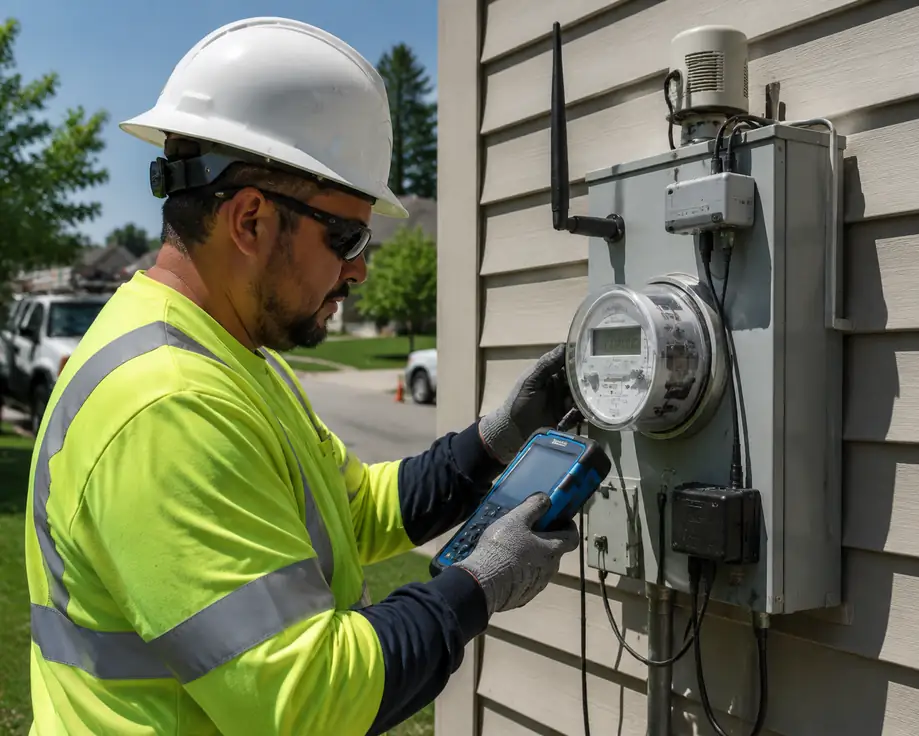
The role profile
Everything you need to know about this role, the same details employers use to post openings and colleges use to build training.
How much does it pay?
Explore the core responsibilities of this role, from daily operations and equipment handling to safety, quality, and performance requirements.
Monitor network health
Watch AMI collectors, repeaters, gateways, communications paths, and device exceptions.
Install field communications
Install, inspect, replace, configure, and test AMI field communications equipment.
Troubleshoot connectivity
Resolve missing reads, weak communications, firmware issues, device alarms, and connectivity faults.
Coordinate across teams
Work with metering, billing, IT, OT, customer service, and field operations.
What skills do you need?
Three core skills sit at the heart of this role. You can learn all of them through short, hands-on training.
AMI Network Monitoring
Monitoring smart-meter networks and troubleshooting in the field.
Collectors & Endpoints
Servicing collectors, gateways, repeaters, and endpoint devices.
Utility Communications
Applying RF mesh, cellular, and utility communications fundamentals.
Related roles.
%2520Technician.webp)
.webp)

Ready to start your
technician journey?
Get matched with training, apprenticeships, and employers tailored to this role.