.svg)
Electric Utility Inspection Technician
Also posted as Electric Utility Inspector Technician; Utility Pole Inspection Technician; Distribution Inspection Technician; Electric Asset Inspection Technician; Field Pole Inspection Technician
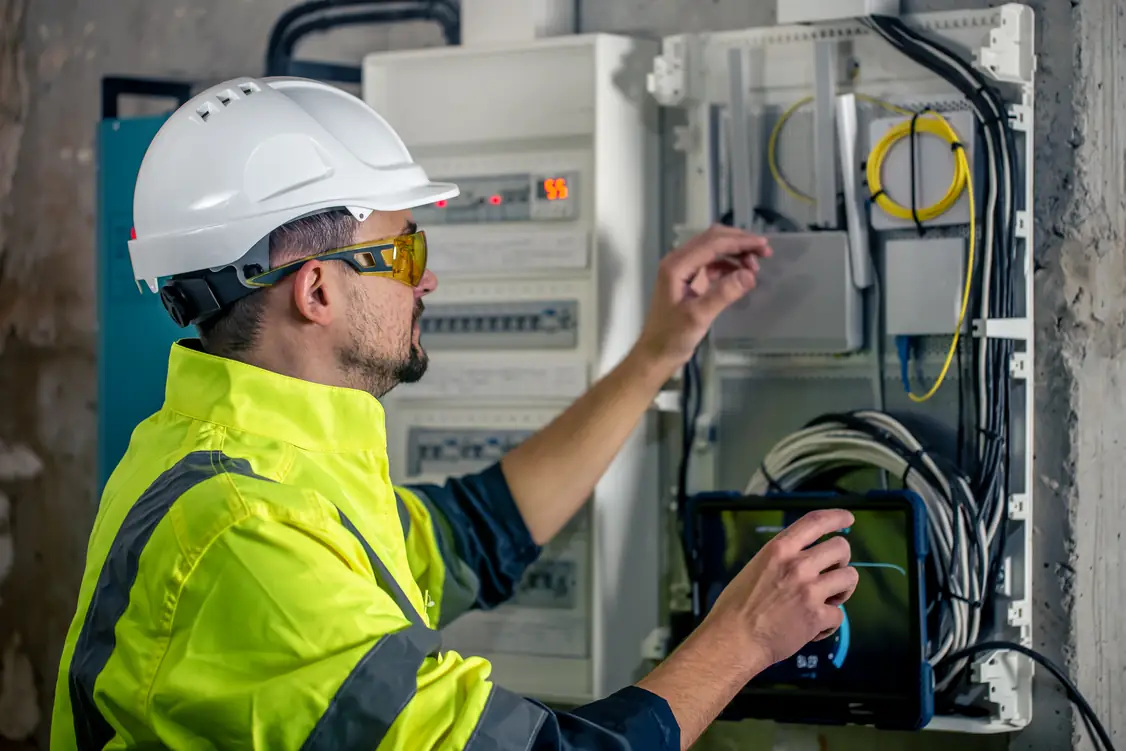
An electric utility inspection technician inspects poles, enclosures, overhead and underground distribution assets, documents hazards and condition, performs diagnostic checks, and initiates corrective work to protect safety, reliability, and asset life. Most people enter through a paid apprenticeship or utility trainee program rather than a four-year degree.
Below: what it pays, what you'd do, the skills you need, and how to become one.
The role profile
Everything you need to know about this role, the same details employers use to post openings and colleges use to build training.
How much does it pay?
Explore the core responsibilities of this role, from daily operations and equipment handling to safety, quality, and performance requirements.
Inspect distribution assets
Inspect poles, hardware, conductors, pad-mounted equipment, enclosures, and underground facilities.
Apply diagnostic methods
Use visual, infrared, pole-shell, sounding, measurement, and approved diagnostic methods.
Document defects
Flag safety hazards, structural defects, vegetation conflicts, mapping errors, and maintenance needs.
Make minor corrections
Perform minor repairs, tags, markers, barriers, or protective corrections within qualification.
What skills do you need?
Three core skills sit at the heart of this role. You can learn all of them through short, hands-on training.
Asset Inspection
Inspecting electric distribution assets on a set cycle.
Pole Condition Screening
Screening poles for structural condition and decay.
Field Diagnostic Tools
Using infrared and other field diagnostic equipment.
Related roles.


Ready to start your
technician journey?
Get matched with training, apprenticeships, and employers tailored to this role.