Aviation
.
Aerospace

eVTOL Technician

Also posted as Advanced Air Mobility Technician; Electric Vertical Lift Technician; Urban Air Mobility Technician

Median wage range
$65k–$102k
National median · per year
Outlook
Growing fast
Entry barrier
Certificate
Certs valued, no degree required
Overview

What is a eVTOL Technician

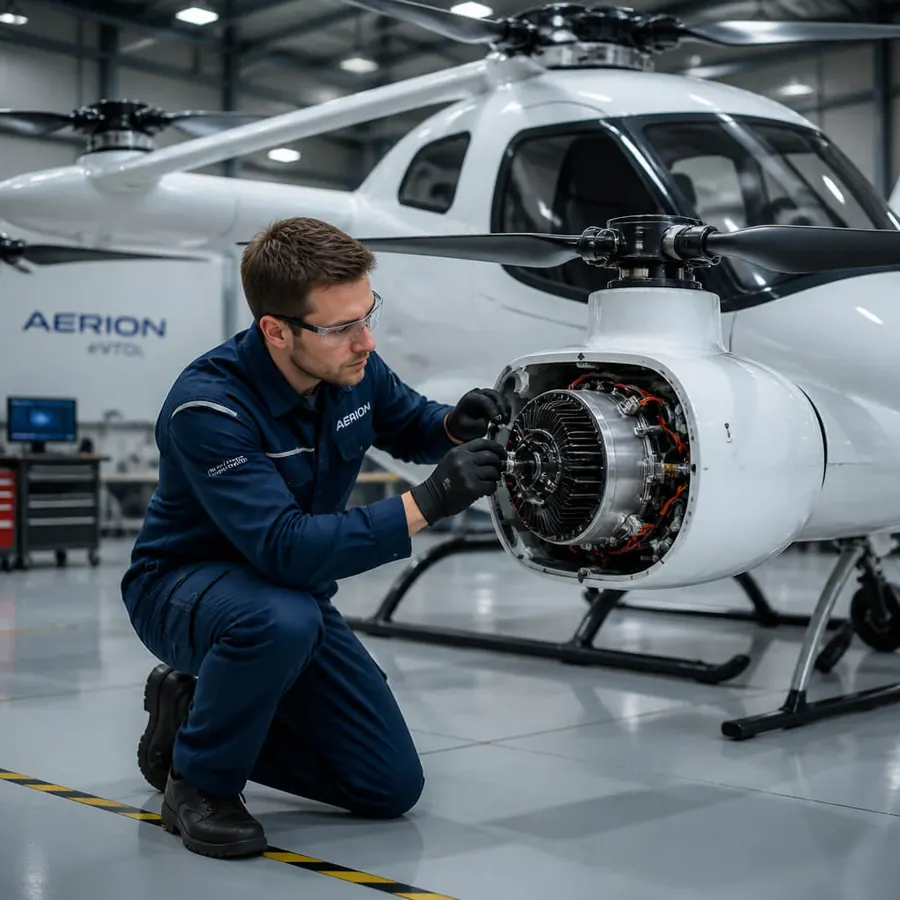
An evtol technician maintains and troubleshoots electric propulsion, avionics, sensors, batteries, high-voltage systems, and diagnostic data tools for advanced air mobility aircraft. It's hands-on work in eVTOL manufacturers, flight-test operations, advanced aviation maintenance teams, and emerging MRO environments, where technical instructions, safety procedures, troubleshooting, and accurate documentation all matter.

eVTOL Technician
Role Snapshot

The role profile

Everything you need to know about this role, the same details employers use to post openings and colleges use to build training.

Median wage range
$65k–$102k
Typical annual pay based on national and industry data.
O*NET codes
49-2091.0049-3011.00
Primary and secondary occupational codes mapping this role to national labor data.
Cluster type
Aerospace
The broader industry group this role belongs to within the technician economy.
Context tags
Where and how this role is commonly applied.
Core skills
Electric Propulsion SystemsHigh-Voltage SafetyAvionics / Sensors
Essential competencies to perform this role effectively.
Canonical Role ID
UNMUDL-AV-036
A unique identifier linking this role across training, jobs, and employer systems.
Pay & Outlook

How much does it pay?

eVTOL Technician in this role earns a median of $65k–$102k a year. Here's how pay typically grows with experience.

$65k–$102k
National wage proxy range from the mapped SOC/O*NET occupation. Actual pay varies by employer, location, shift, credential, aircraft/system type, and experience.
Wage ranges are illustrative, based on national and industry data. Actual pay varies by employer, location, certification, and experience.
Entry
Experienced
Specialized
On The Job

What does a eVTOL Technician do?

Explore the core responsibilities of this role, from daily operations and equipment handling to safety, quality, and performance requirements.

01

Inspect electric aircraft systems

Check motors, inverters, batteries, avionics, sensors, wiring, and cooling systems for condition and readiness.

02

Use diagnostic data tools

Review fault codes, logs, sensor data, and software-enabled diagnostics to isolate system issues.

03

Service high-voltage components

Follow high-voltage safety steps while inspecting, replacing, or verifying electric propulsion and battery components.

04

Document readiness checks

Record maintenance actions, diagnostics, component status, and safety checks for operational traceability.

Skills You Will Build

What skills do you need?

Three core skills sit at the heart of this role. You can learn all of them through short, hands-on training.

Electric Propulsion Systems

Maintaining electric motors, inverters, controllers, and related propulsion interfaces.

High-Voltage Safety

Applying safe isolation, PPE, lockout, verification, and handling practices for high-voltage systems.

Avionics / Sensors

Troubleshooting sensors, avionics interfaces, data links, and onboard diagnostic information.

Your next step

How to become one.

Take a short, hands-on course to build the core skills, then apply to jobs hiring near you, all in one place, powered by the Unmudl Skills-to-Jobs® Network.

↗ Powered by Unmudl

Get job-ready
training

Short, hands-on courses and Skill Paths aligned to what employers actually hire for — built with colleges and industry.

↗ Powered by Unmudl

Find jobs
hiring near you

Connect with employers hiring for technician roles at every level. Browse live openings on the Unmudl job board.

Keep Exploring

Related roles.

back To Full Library
Common Questions

eVTOL Technician, FAQ

An evtol technician maintains and troubleshoots electric propulsion, avionics, sensors, batteries, high-voltage systems, and diagnostic data tools for advanced air mobility aircraft. The role usually combines hands-on equipment work, technical manuals, inspection or test procedures, safety controls, and maintenance documentation.
The mapped national wage proxy range is about $64,550–$102,030 per year, with a median around $80,600. Pay varies by location, employer, shift, overtime, credentials, and the aircraft or system being supported.
Most people start with an aviation maintenance, electronics, manufacturing, inspection, or related technical program, then build hands-on experience with Electric Propulsion Systems and High-Voltage Safety. Some roles may require FAA, NDT, electrical, manufacturer, or employer-specific credentials.
A four-year degree is usually not the main requirement. Employers commonly value a focused certificate, associate-level technical training, military or apprenticeship experience, and proof that you can follow safety-critical procedures accurately.
Yes, it can be a strong technician career for people who like hands-on, safety-critical systems work. The skills can transfer into related aviation, MRO, airport infrastructure, aerospace manufacturing, or advanced mobility roles as advanced electric aircraft, connected diagnostics, and automation continue to expand.

Ready to start your
technician journey?

Get matched with training, apprenticeships, and employers tailored to this role.