.svg)
Fuel Systems Technician
Also posted as Bunkering Systems Technician; Fuel Farm Technician; Marine Fuel Equipment Technician
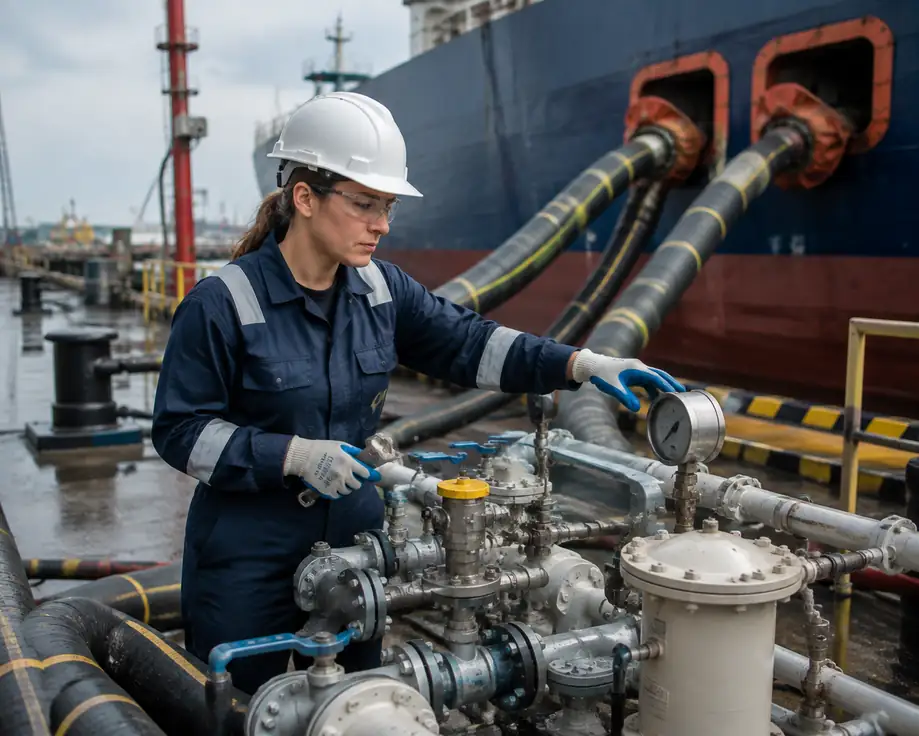
A fuel systems technician performs fuel pumps, valves, meters and filtration, bunkering and transfer-system operation, and spill prevention and hazardous-energy controls to keep port, terminal, waterfront, vessel-support, and marine operations safe, reliable, compliant, and ready for operation. Most people start with a high school diploma plus employer or technical training rather than a four-year degree.
Below: what it pays, what you'd do, the skills you need, and how to become one.
The role profile
Everything you need to know about this role, the same details employers use to post openings and colleges use to build training.
How much does it pay?
Explore the core responsibilities of this role, from daily operations and equipment handling to safety, quality, and performance requirements.
Maintain fuel equipment
Service fuel pumps, valves, meters, and filtration on transfer systems.
Run bunkering operations
Operate bunkering and transfer systems during fueling evolutions.
Prevent spills
Apply spill prevention and hazardous-energy controls throughout the job.
Maintain fixed equipment
Service both mobile and fixed equipment across the facility.
What skills do you need?
Three core skills sit at the heart of this role. You can learn all of them through short, hands-on training.
Fuel System Equipment
Maintaining fuel pumps, valves, meters, and filtration.
Bunkering Operations
Operating transfer systems during fueling evolutions.
Spill Prevention
Applying spill and hazardous-energy controls on fuel work.
Related roles.



Ready to start your
technician journey?
Get matched with training, apprenticeships, and employers tailored to this role.