Energy
.
Gas Measurement, Integrity & Control

Gas Control Technician

Also posted as Gas Controller Technician; Gas Dispatch Technician; Gas Control Room Technician; Transmission Pipeline Control Technician; Gas SCADA Technician

Median wage range
$70k–$115k
National median · per year
Outlook
Steady
Entry barrier
HS + training
No degree required
Overview

What is a Gas Control Technician

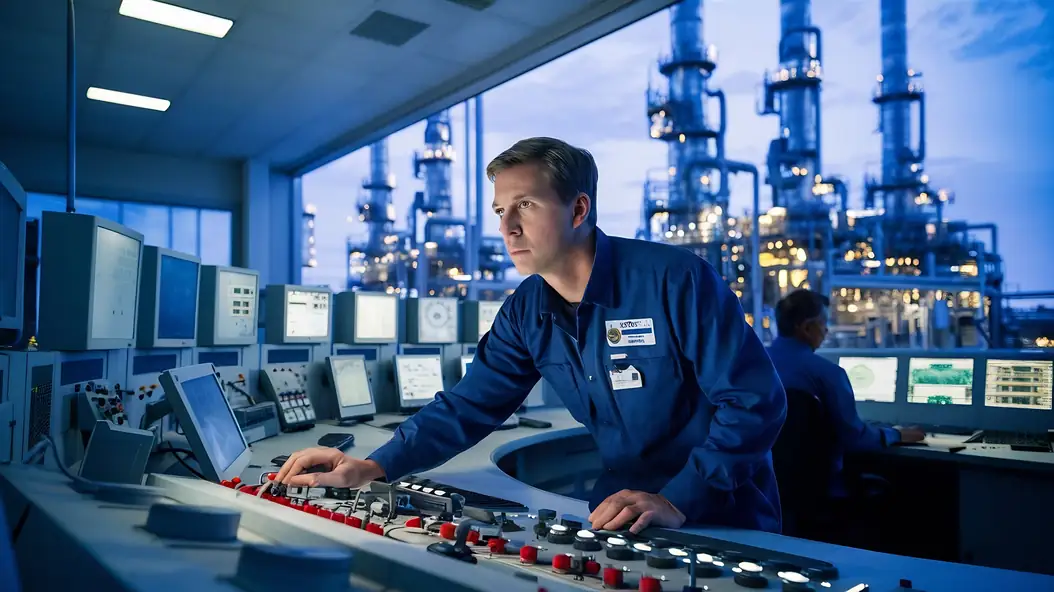
A gas control technician monitors and controls natural gas transmission and distribution systems through SCADA, communications, pressure and flow data, compressor coordination, interconnects, storage, and emergency operating procedures. Most people start with a high school diploma plus employer or technical training rather than a four-year degree.

Gas Control Technician
Role Snapshot

The role profile

Everything you need to know about this role, the same details employers use to post openings and colleges use to build training.

Median wage range
$70k–$115k
Typical annual pay based on national and industry data.
O*NET codes
51-8092.0017-3023.00
Primary and secondary occupational codes mapping this role to national labor data.
Cluster type
Gas Measurement, Integrity & Control
The broader industry group this role belongs to within the technician economy.
Context tags
Where and how this role is commonly applied.
Core skills
Gas System MonitoringSCADA & Alarm ManagementPressure & Linepack
Essential competencies to perform this role effectively.
Canonical Role ID
UNMUDL-UT-A027
A unique identifier linking this role across training, jobs, and employer systems.
Pay & Outlook

How much does it pay?

Gas Control Technician in this role earns a median of $70k–$115k a year. Here's how pay typically grows with experience.

$70k–$115k
National median annual wage range. Utility pay follows local schedules and bargaining agreements, and journey-level technicians with overtime and callout earn at the higher end.
Wage ranges are illustrative, based on national and industry data. Actual pay varies by employer, location, certification, and experience.
Entry
Experienced
Specialized
On The Job

What does a Gas Control Technician do?

Explore the core responsibilities of this role, from daily operations and equipment handling to safety, quality, and performance requirements.

01

Monitor the gas system

Watch pressure, flow, linepack, alarms, valves, compressors, and interconnects through SCADA.

02

Control system operation

Direct approved equipment, set points, routing, supply, and operating conditions.

03

Respond to abnormal events

Handle alarms, abnormal operations, outages, supply constraints, and emergencies.

04

Coordinate communications

Communicate with field crews, suppliers, pipelines, utilities, dispatch, and responders.

Skills You Will Build

What skills do you need?

Three core skills sit at the heart of this role. You can learn all of them through short, hands-on training.

Gas System Monitoring

Monitoring transmission and distribution system conditions.

SCADA & Alarm Management

Running gas SCADA screens and managing alarm response.

Pressure & Linepack

Applying pressure, flow, linepack, and supply fundamentals.

Your next step

How to become one.

Take a short, hands-on course to build the core skills, then apply to jobs hiring near you, all in one place, powered by the Unmudl Skills-to-Jobs® Network.

↗ Powered by Unmudl

Get job-ready
training

Short, hands-on courses and Skill Paths aligned to what employers actually hire for — built with colleges and industry.

↗ Powered by Unmudl

Find jobs
hiring near you

Connect with employers hiring for technician roles at every level. Browse live openings on the Unmudl job board.

Keep Exploring

Related roles.

back To Full Library
Common Questions

Gas Control Technician, FAQ

A gas control technician monitors and controls natural gas transmission and distribution systems through SCADA, communications, pressure and flow data, compressor coordination, interconnects, storage, and emergency operating procedures.
The national range runs about $70,000–$115,000 per year, with a median near $93,000. Entry-level roles start toward the bottom of that range, and pay varies by employer, region, shift, and certifications.
Most people start with a high school diploma plus employer or technical training. You can build the core skills, Gas System Monitoring, SCADA & Alarm Management, and Pressure & Linepack, through training on Unmudl, then apply to open roles.
No. A high school diploma or equivalent plus employer or technical training is the usual starting point, and employers train qualified candidates on their own procedures.
It's a durable technical career with a clear path to higher pay through experience and qualification. Demand is specialized and durable because gas systems require continuous control, qualified shift coverage, and emergency response. The skills also transfer to roles like SCADA technician.

Ready to start your
technician journey?

Get matched with training, apprenticeships, and employers tailored to this role.