.svg)
Marine Electric Propulsion Technician
Also posted as Electric Propulsion Technician; Integrated Electric Drive Technician; Electric Motor Propulsion Technician; Power Electronics Technician; Electric Ship Technician
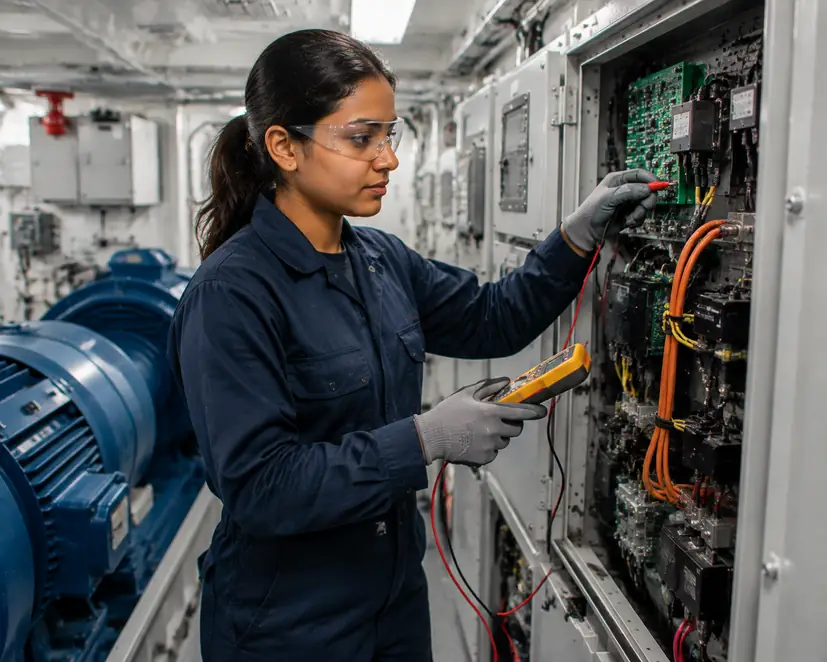
A marine electric propulsion technician performs high-power motors and drives, inverters and power electronics, and high-voltage isolation and diagnostics to keep vessel propulsion, electrical power, and energy systems safe, reliable, compliant, and ready for operation. Most people enter through a paid apprenticeship or utility trainee program rather than a four-year degree.
Below: what it pays, what you'd do, the skills you need, and how to become one.
The role profile
Everything you need to know about this role, the same details employers use to post openings and colleges use to build training.
How much does it pay?
Explore the core responsibilities of this role, from daily operations and equipment handling to safety, quality, and performance requirements.
Service motors and drives
Maintain high-power propulsion motors and variable-speed drives.
Maintain power electronics
Service inverters and power electronics that condition propulsion power.
Verify high-voltage isolation
Prove isolation and run diagnostics before anyone touches high-voltage equipment.
Troubleshoot propulsion faults
Trace faults across the electric propulsion chain from source to shaft.
What skills do you need?
Three core skills sit at the heart of this role. You can learn all of them through short, hands-on training.
Motors & Drives
Maintaining high-power propulsion motors and variable-speed drives.
Power Electronics
Servicing inverters and converters that condition propulsion power.
High-Voltage Diagnostics
Proving isolation and diagnosing faults on high-voltage systems.
Related roles.
%2520Specialist%2520Technician.webp)


Ready to start your
technician journey?
Get matched with training, apprenticeships, and employers tailored to this role.