.svg)
Mechanical Test Technician
Also posted as Shipboard Mechanical Test Technician; STO Test Mechanic; Hydrostatic Test Technician; Mechanical Systems Tester
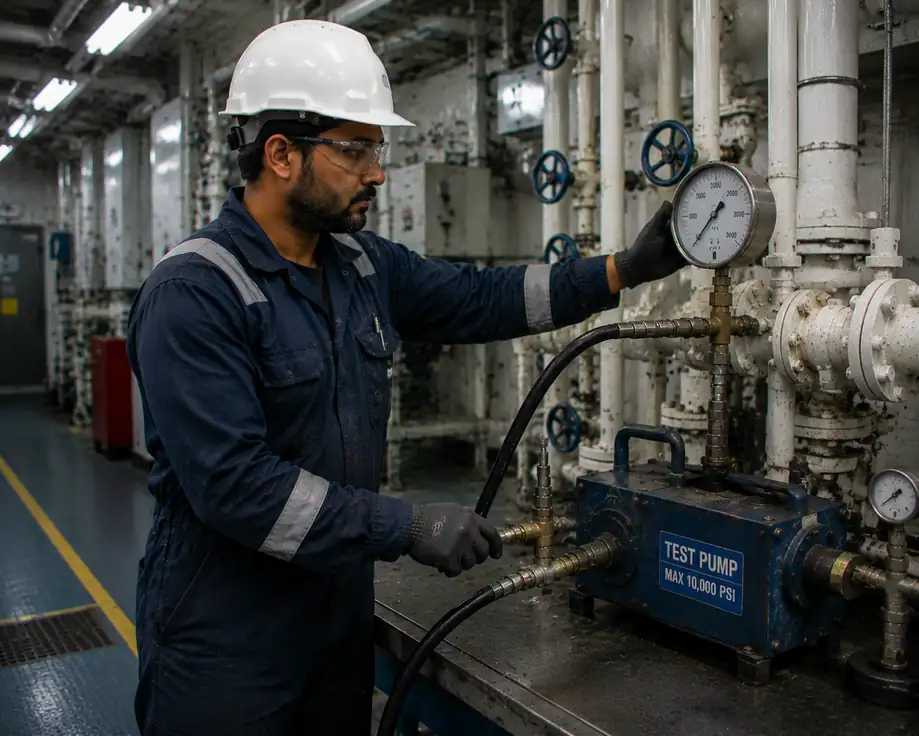
A mechanical test technician performs hydrostatic and operational testing, test pumps, hoses and fittings, and steam, hydraulic and auxiliary system testing to keep shipboard systems, components, materials, and formal acceptance testing safe, reliable, compliant, and ready for operation. Many people start with a two-year associate degree or a technical certificate rather than a four-year degree.
Below: what it pays, what you'd do, the skills you need, and how to become one.
The role profile
Everything you need to know about this role, the same details employers use to post openings and colleges use to build training.
How much does it pay?
Explore the core responsibilities of this role, from daily operations and equipment handling to safety, quality, and performance requirements.
Run hydrostatic tests
Perform hydrostatic and operational testing on piping and pressure systems.
Rig test equipment
Set up test pumps, hoses, and fittings safely for the pressure involved.
Test ship systems
Test steam, hydraulic, and auxiliary systems against acceptance criteria.
Plan and execute procedures
Work from written test plans and procedures, step by step, with records.
What skills do you need?
Three core skills sit at the heart of this role. You can learn all of them through short, hands-on training.
Hydrostatic Testing
Pressure testing piping and systems to acceptance criteria.
Test Rig Setup
Rigging test pumps, hoses, and fittings for safe pressure work.
System Testing
Testing steam, hydraulic, and auxiliary systems in operation.
Related roles.
.webp)

Ready to start your
technician journey?
Get matched with training, apprenticeships, and employers tailored to this role.