QA/QC Technician
Also posted as Aerospace Quality Technician; Quality Inspector; Receiving Inspector; Final Inspection Technician
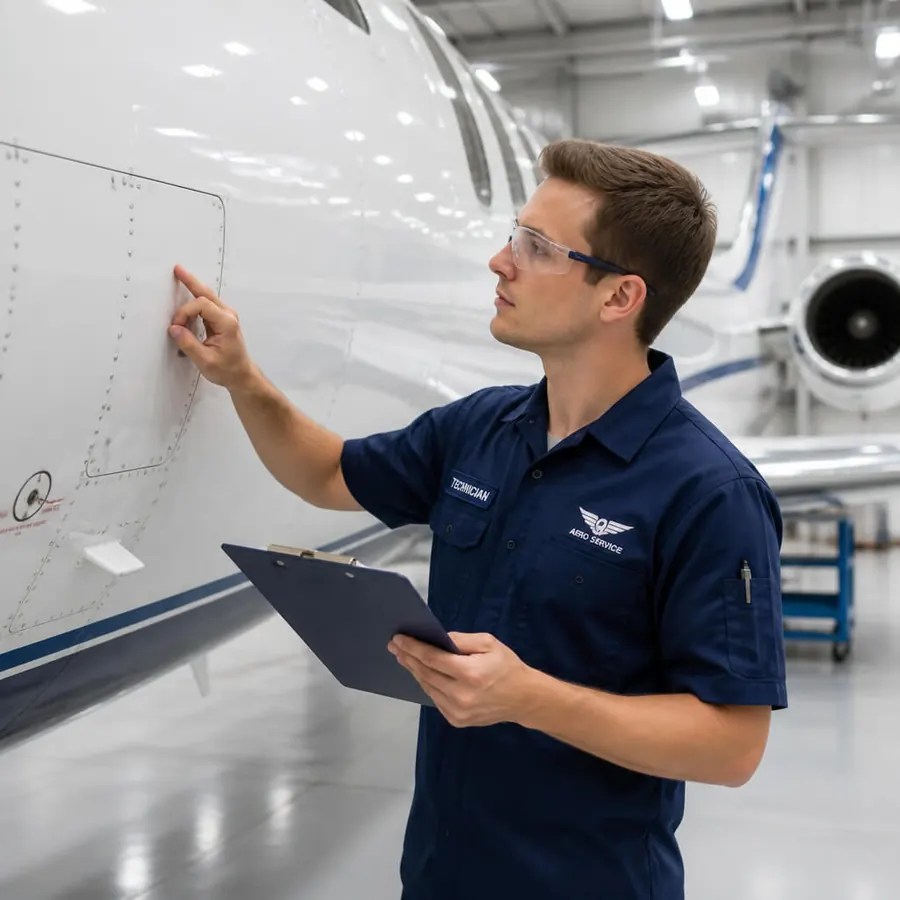
A qa/qc technician inspects aerospace parts, verifies drawings and specifications, records nonconformances, and supports traceable quality decisions. It's hands-on work in aerospace manufacturing cells, MRO inspection areas, quality labs, and receiving/final inspection departments, where technical instructions, safety procedures, troubleshooting, and accurate documentation all matter.
Below: what it pays, what you'd do, the skills you need, and how to become one.
The role profile
Everything you need to know about this role, the same details employers use to post openings and colleges use to build training.
How much does it pay?
Explore the core responsibilities of this role, from daily operations and equipment handling to safety, quality, and performance requirements.
Inspect parts and assemblies
Check dimensions, workmanship, materials, labels, and build records against drawings and specifications.
Use measurement tools
Use gauges, calipers, micrometers, visual checks, and inspection plans to verify requirements.
Document nonconformances
Record defects, deviations, missing data, and rework needs clearly for quality review.
Support traceability
Maintain inspection records, serial/lot data, certificates, and quality evidence.
What skills do you need?
Three core skills sit at the heart of this role. You can learn all of them through short, hands-on training.
Inspection Methods
Applying visual, dimensional, functional, and documentation checks to verify product quality.
Drawings / Spec Interpretation
Reading engineering drawings, specifications, tolerances, and acceptance criteria.
Measurement Tools
Using gauges, calipers, micrometers, and other inspection tools accurately and consistently.
Related roles.


Ready to start your
technician journey?
Get matched with training, apprenticeships, and employers tailored to this role.