.svg)
Utility Vegetation Management Technician
Also posted as Utility Vegetation Management Technician/Specialist; UVM Technician; Vegetation Management Technician; Utility Forestry Technician; Right-of-Way Vegetation Technician
A utility vegetation management technician inspects and manages vegetation near electric lines, substations, rights-of-way, and access routes to reduce outages, wildfire risk, safety hazards, and interference with utility operations. Most people start with a high school diploma plus employer or technical training rather than a four-year degree.
Below: what it pays, what you'd do, the skills you need, and how to become one.
The role profile
Everything you need to know about this role, the same details employers use to post openings and colleges use to build training.
How much does it pay?
Explore the core responsibilities of this role, from daily operations and equipment handling to safety, quality, and performance requirements.
Inspect rights-of-way
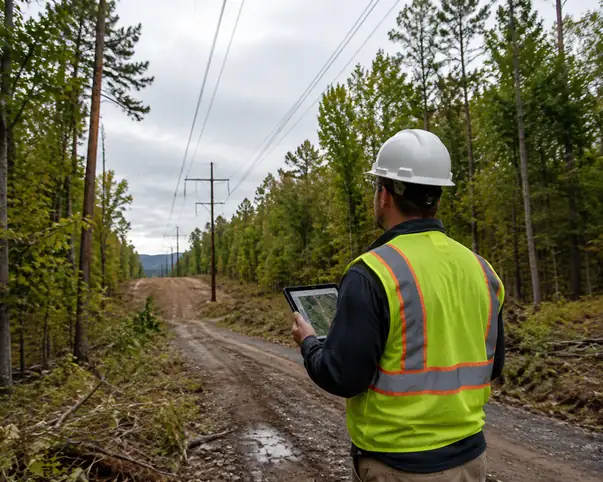
Inspect transmission and distribution rights-of-way for vegetation hazards, clearance, and access issues.
Assess vegetation risk
Identify trees, assess risk, and document pruning, removal, treatment, or monitoring actions.
Record work in systems
Use GIS, mobile applications, maps, photographs, and work-management systems.
Coordinate with stakeholders
Work with utility staff, property owners, contractors, arborists, agencies, and emergency teams.
What skills do you need?
Three core skills sit at the heart of this role. You can learn all of them through short, hands-on training.
Right-of-Way Inspection
Inspecting utility rights-of-way for vegetation risk.
Tree Identification
Identifying trees and vegetation that threaten clearances.
Hazard Tree Assessment
Assessing hazard trees and clearance conditions near lines.
Related roles.



Ready to start your
technician journey?
Get matched with training, apprenticeships, and employers tailored to this role.