
.svg)
Electricians install, maintain, and repair electrical systems in homes, businesses, and industrial settings. On the surface, that sounds straightforward, but the work itself varies wildly depending on where you end up.
You might specialize in residential wiring (new homes and renovations), commercial systems (office buildings, hospitals), or industrial maintenance (factories, power plants). Some electricians focus on renewable energy, installing and servicing solar panels or wind systems. Others specialize in vehicle electrical systems or telecommunications infrastructure. The common thread: you're solving problems with electricity, and you need both technical knowledge and practical troubleshooting skills.
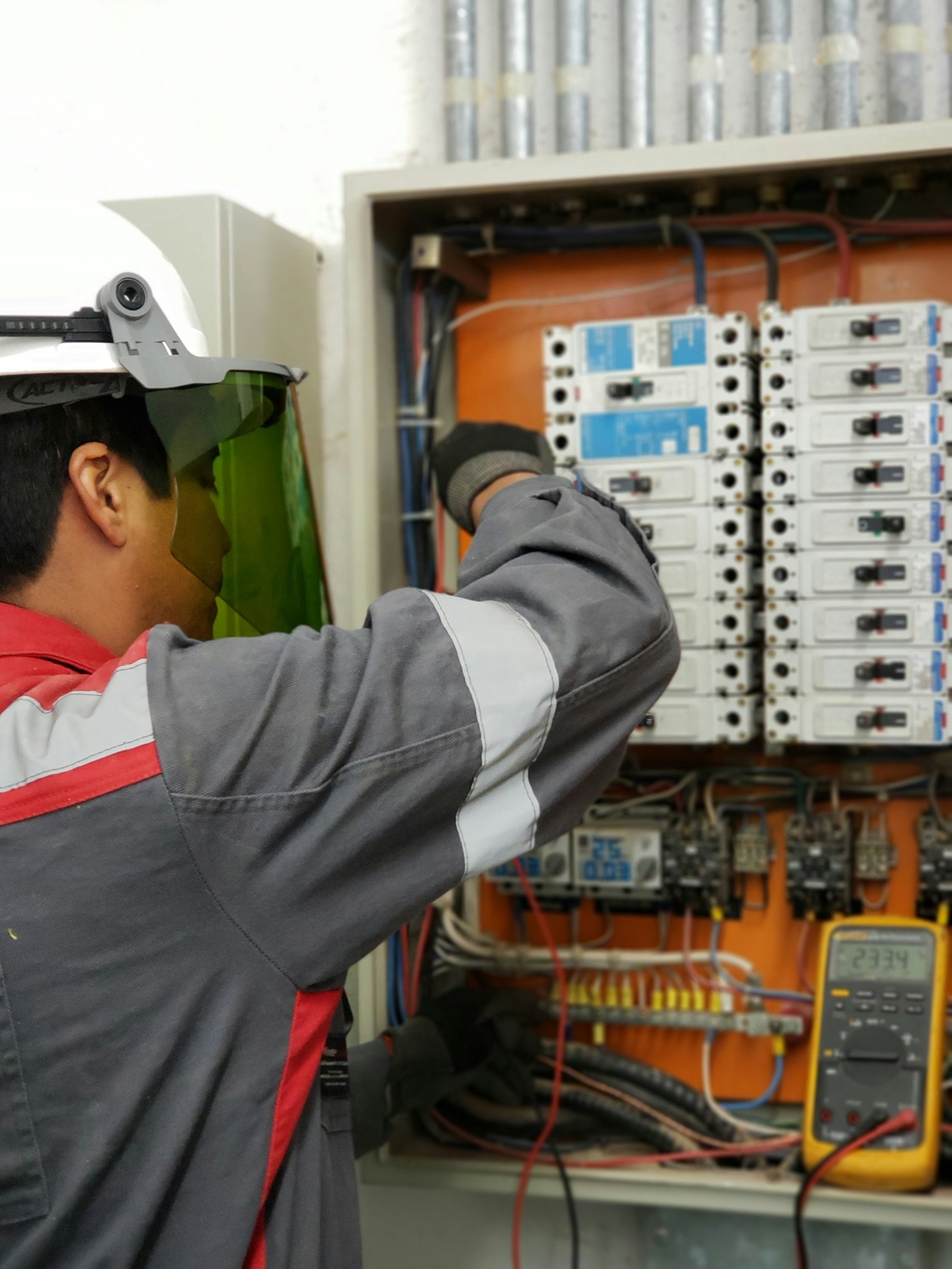
Walk a commercial construction site and you'll see electricians coordinating with framers and plumbers, running conduit (metal tubing that houses wires), pulling wire, and testing connections. In an industrial plant, a maintenance electrician might spend their morning troubleshooting a conveyor motor that quit overnight and their afternoon documenting the repair in the CMMS (computerized maintenance management system, which tracks all equipment work) so the next technician knows what was done. In a new subdivision, residential electricians rough in wiring before walls are closed, then return to install outlets, switches, and fixtures.
The work demands precision. Electrical code (both the National Electrical Code and local building codes) is non-negotiable. One mistake can create a fire hazard or worse. But that same rigor is why electricians are trusted professionals and why the field offers strong job security. You're not easily replaced by automation, and you're needed everywhere.

The path breaks down into clear, sequential steps:
The timeline varies based on your route.
Apprenticeship timeline: You're working full-time and attending classes part-time or in blocks. Many apprenticeships require 1,000 hours of work and 144 hours of classroom instruction per year. At that pace, you're looking at 8 to 10 years of logged hours, which breaks down to roughly 4 to 5 years on the calendar if you work year-round. The advantage? You're earning while you learn, so you offset tuition costs.
Trade school timeline: If you attend full-time, you can finish in 6 months to 2 years depending on program intensity. After graduation, you still need to log on-the-job hours (usually 4,000 to 8,000) to satisfy journeyman requirements in most states. So your true time-to-license is 2 to 3 years total. That's faster than apprenticeship alone, but you've paid tuition upfront.
Hybrid approach: Some people do trade school first (6 months to 1 year) and then enter an apprenticeship, compressing the total timeline. You get technical knowledge from trade school, then earn while you log apprenticeship hours.
One caveat: state requirements vary. New York, California, and Texas have different hour requirements and exam structures. Always check your state's electrical board website to confirm the exact path in your area.

The choice between apprenticeship and trade school isn't really about better or worse, it's about your financial situation, learning style, and timeline.
Apprenticeships pair you with a licensed electrician who mentors you on actual job sites. You work full-time (earning wage, typically $15 to $20 per hour starting out) and attend classroom training part-time or in blocks. Because you're employed and earning from day one, you offset the cost of tuition (which is usually much lower than trade school). The downside: it takes 4 to 5 years, and you're not a licensed electrician until you pass the journeyman exam. You're also dependent on an employer sponsoring you. Not every shop has apprenticeship openings, though registered apprenticeships through the U.S. Department of Labor can help you find positions.
Trade schools are classroom-intensive programs at community colleges, private vocational schools, or training centers. You attend for 6 months to 2 years full-time, learning code, theory, and lab-based hands-on work. You graduate with a certificate or diploma, but you're not yet a licensed journeyman. You still need to log on-the-job hours (often 4,000 to 8,000) working under a licensed electrician. The advantage: you're job-ready faster and have deeper technical knowledge before entering the field. The disadvantage: you pay tuition upfront, and you're not earning while you learn. Most community colleges offer financial aid to offset costs.
Which fits you? If you need income immediately or can't afford tuition, apprenticeship is your route. If you want structured learning and a faster path to basic competence, trade school makes sense. Many electricians do both. They attend trade school to accelerate learning, then apprentice to log the required hours and earn.





Salary is often the first question. Here's the honest picture:
Entry-level: When you're new to the field (first-year apprentice or fresh trade school grad), expect modest wages. You're typically earning in the $25,000 to $35,000 range annually, depending on region and employer. The appeal is the trajectory. Your wage grows as you gain hours and experience.
Journeyman: Once you're licensed, your income improves significantly. Journeymen typically earn in the $50,000 to $70,000 range, and in high-cost areas or specialized fields (industrial maintenance, solar), you can reach $80,000 or more. The exact figure depends on your location, specialization, and whether you work for a contractor or a large industrial employer. Self-employed electricians who build a client base often earn higher incomes, though that comes with business overhead.
Master electrician or business owner: If you eventually start your own electrical contracting business, income scales based on your client base and overhead. Many master electricians earn six figures, though that comes with business risk and management responsibility.
Job outlook: The Bureau of Labor Statistics projects steady growth in electrical occupations through 2034. Aging infrastructure, renewable energy expansion, and new construction all drive demand. Unlike some trades, electrician roles are harder to outsource or automate. You're solving on-site problems that require judgment, adaptability, and licensed credentials.
Geographic variation: Electrician demand isn't uniform across the U.S. High-growth manufacturing regions, solar hotspots (Southwest and California), and areas with aging infrastructure and active construction all see higher demand and sometimes higher wages. That's why understanding regional data matters when planning your career.
The path to becoming an electrician is clear: pick your route (apprenticeship or trade school), commit to the education and on-the-job hours, and work toward your journeyman license. The timeline varies, but you're looking at 18 months to 5 years depending on your choices and state requirements.
Your first step is understanding the specific requirements in your state and identifying local apprenticeships or trade schools. Many states have clear pathways through registered apprenticeships (searchable on the Department of Labor website) or community college programs. If you're already employed, check whether your employer offers tuition assistance or apprenticeship sponsorship.
Once you've chosen your path, you're ready to explore electrical training programs that match your timeline and location. Some are apprenticeship-based, others are short-format trade school options. The sooner you start, the sooner you're earning a journeyman's income and building a career in a field that values your skills and offers real stability.