Energy
.
Electric Transmission, Distribution & Linework

Electric Underground Technician

Also posted as Underground Electric Technician; Underground Distribution Technician; URD Technician; Electric Underground Construction Technician; Underground Line Technician

Median wage range
$50k–$95k
National median · per year
Outlook
Growing
Entry barrier
Apprenticeship
Earn while you learn
Overview

What is a Electric Underground Technician

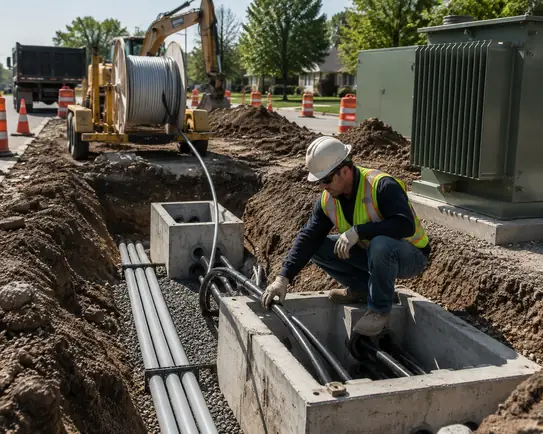
An electric underground technician installs, maintains, and repairs underground electric distribution conduit, cable, vaults, handholes, pad-mounted transformers, switches, and service infrastructure. Most people enter through a paid apprenticeship or utility trainee program rather than a four-year degree.

Electric Underground Technician
Role Snapshot

The role profile

Everything you need to know about this role, the same details employers use to post openings and colleges use to build training.

Median wage range
$50k–$95k
Typical annual pay based on national and industry data.
O*NET codes
49-9051.0047-3013.00
Primary and secondary occupational codes mapping this role to national labor data.
Cluster type
Electric Transmission, Distribution & Linework
The broader industry group this role belongs to within the technician economy.
Context tags
Where and how this role is commonly applied.
Core skills
Underground ConstructionDuct Bank & VaultsCable Pulling
Essential competencies to perform this role effectively.
Canonical Role ID
UNMUDL-UT-A007
A unique identifier linking this role across training, jobs, and employer systems.
Pay & Outlook

How much does it pay?

Electric Underground Technician in this role earns a median of $50k–$95k a year. Here's how pay typically grows with experience.

$50k–$95k
National median annual wage range. Utility pay follows local schedules and bargaining agreements, and journey-level technicians with overtime and callout earn at the higher end.
Wage ranges are illustrative, based on national and industry data. Actual pay varies by employer, location, certification, and experience.
Entry
Experienced
Specialized
On The Job

What does a Electric Underground Technician do?

Explore the core responsibilities of this role, from daily operations and equipment handling to safety, quality, and performance requirements.

01

Build underground systems

Install conduit, ducts, vaults, handholes, grounding, cable, and pad-mounted equipment.

02

Operate construction equipment

Run trenchers, excavators, pulling equipment, line trucks, and compactors.

03

Pull and terminate cable

Pull, identify, terminate, and assist with splicing underground primary and secondary cable.

04

Protect existing facilities

Locate utilities, inspect excavations, and protect existing infrastructure.

Skills You Will Build

What skills do you need?

Three core skills sit at the heart of this role. You can learn all of them through short, hands-on training.

Underground Construction

Building underground electric distribution systems.

Duct Bank & Vaults

Installing conduit, duct bank, vault, and handhole systems.

Cable Pulling

Pulling, handling, and identifying underground cable.

Your next step

How to become one.

Take a short, hands-on course to build the core skills, then apply to jobs hiring near you, all in one place, powered by the Unmudl Skills-to-Jobs® Network.

↗ Powered by Unmudl

Get job-ready
training

Short, hands-on courses and Skill Paths aligned to what employers actually hire for — built with colleges and industry.

↗ Powered by Unmudl

Find jobs
hiring near you

Connect with employers hiring for technician roles at every level. Browse live openings on the Unmudl job board.

Keep Exploring

Related roles.

back To Full Library
Common Questions

Electric Underground Technician, FAQ

An electric underground technician installs, maintains, and repairs underground electric distribution conduit, cable, vaults, handholes, pad-mounted transformers, switches, and service infrastructure.
The national range runs about $50,000–$95,000 per year, with a median near $73,000. Entry-level roles start toward the bottom of that range, and pay varies by employer, region, shift, and certifications.
Most people enter through a paid apprenticeship or utility trainee program and qualify on the job. You can build the core skills, Underground Construction, Duct Bank & Vaults, and Cable Pulling, through training on Unmudl, then apply to open roles.
No. The standard route is a paid apprenticeship or trainee program where you earn while you learn and qualify on the job.
It's a durable technical career with a clear path to higher pay through experience and qualification. Steady to strong demand is supported by underground conversions, new development, and resilience projects. The skills also transfer to related roles like industrial electrician (construction) and heavy equipment technician.

Ready to start your
technician journey?

Get matched with training, apprenticeships, and employers tailored to this role.