Defense
.
Combat, Sensors & Communications

Electronic Warfare Technician

Also posted as EW Technician; Electronic Support Measures Technician; Countermeasures Technician; Shipboard EW Technician

Median wage range
$52k–$82k
National median · per year
Outlook
Steady
Entry barrier
Associate or cert
Two-year degree common, not required
Overview

What is a Electronic Warfare Technician

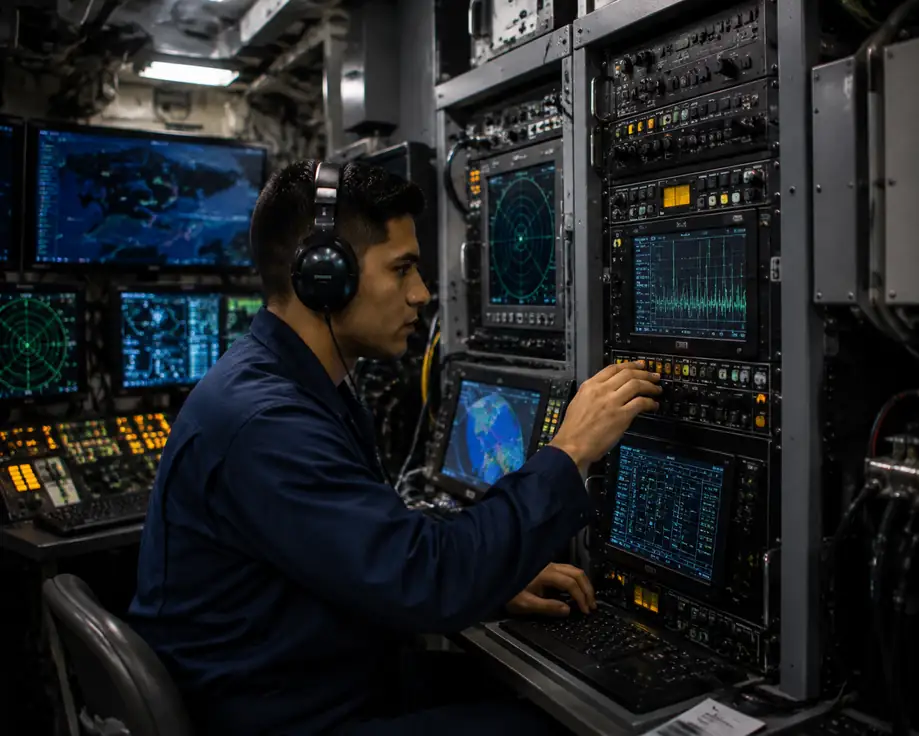
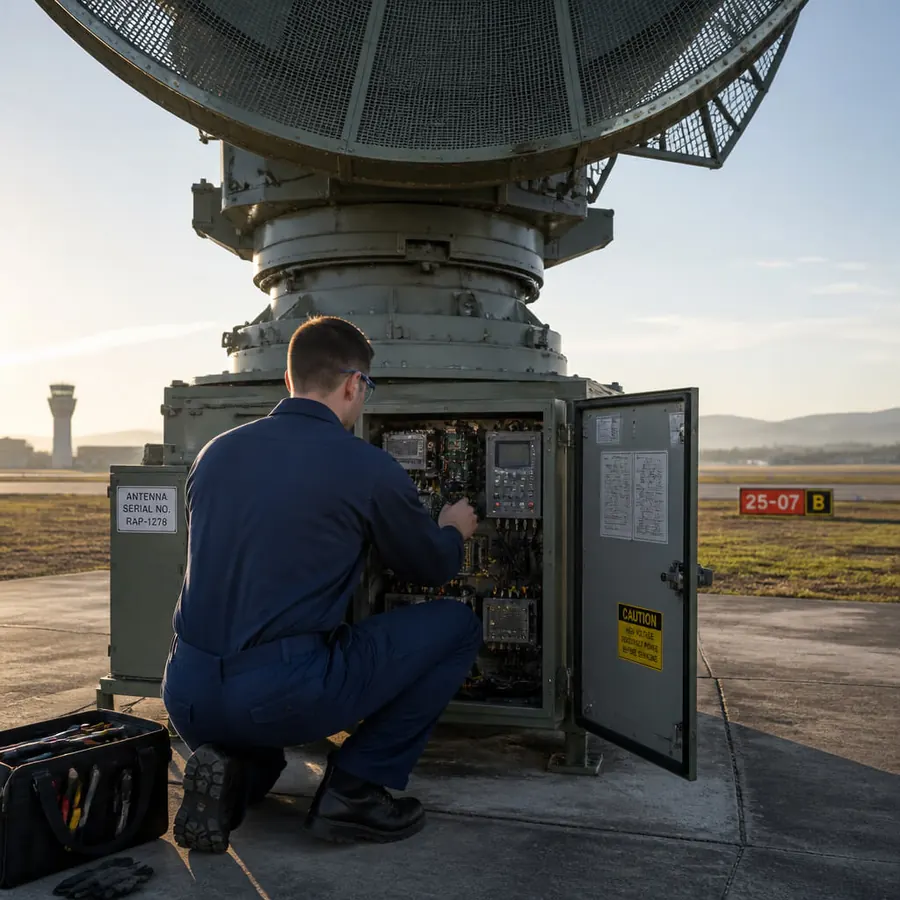
An electronic warfare technician performs electronic support and countermeasure systems, RF threat detection and classification, and antenna, receiver and processor maintenance to keep naval combat, sensor, communications, and mission systems safe, reliable, compliant, and ready for operation. Many people start with a two-year associate degree or a technical certificate rather than a four-year degree.

Electronic Warfare Technician
Role Snapshot

The role profile

Everything you need to know about this role, the same details employers use to post openings and colleges use to build training.

Median wage range
$52k–$82k
Typical annual pay based on national and industry data.
O*NET codes
49-2021.0017-3023.00
Primary and secondary occupational codes mapping this role to national labor data.
Cluster type
Combat, Sensors & Communications
The broader industry group this role belongs to within the technician economy.
Context tags
Where and how this role is commonly applied.
Core skills
Electronic Warfare SystemsRF Threat DetectionAntenna & Receiver Maintenance
Essential competencies to perform this role effectively.
Canonical Role ID
UNMUDL-DM-A028
A unique identifier linking this role across training, jobs, and employer systems.
Pay & Outlook

How much does it pay?

Electronic Warfare Technician in this role earns a median of $52k–$82k a year. Here's how pay typically grows with experience.

$52k–$82k
National median annual wage range from the mapped occupational proxy. Pay varies by region, employer, shift, and clearance, and advanced qualifications push earnings higher.
Wage ranges are illustrative, based on national and industry data. Actual pay varies by employer, location, certification, and experience.
Entry
Experienced
Specialized
On The Job

What does a Electronic Warfare Technician do?

Explore the core responsibilities of this role, from daily operations and equipment handling to safety, quality, and performance requirements.

01

Maintain EW systems

Service electronic support and countermeasure systems that detect and respond to threats.

02

Classify RF threats

Detect and classify RF emissions to support threat identification.

03

Service RF hardware

Maintain antennas, receivers, and processors across the EW chain.

04

Diagnose electronic systems

Isolate electronic faults across receivers, processors, and displays.

Skills You Will Build

What skills do you need?

Three core skills sit at the heart of this role. You can learn all of them through short, hands-on training.

Electronic Warfare Systems

Maintaining electronic support and countermeasure equipment.

RF Threat Detection

Detecting and classifying RF emissions in the operating environment.

Antenna & Receiver Maintenance

Servicing antennas, receivers, and processing hardware.

Your next step

How to become one.

Take a short, hands-on course to build the core skills, then apply to jobs hiring near you, all in one place, powered by the Unmudl Skills-to-Jobs® Network.

↗ Powered by Unmudl

Get job-ready
training

Short, hands-on courses and Skill Paths aligned to what employers actually hire for — built with colleges and industry.

↗ Powered by Unmudl

Find jobs
hiring near you

Connect with employers hiring for technician roles at every level. Browse live openings on the Unmudl job board.

Keep Exploring

Related roles.

back To Full Library
Common Questions

Electronic Warfare Technician, FAQ

An electronic warfare technician performs electronic support and countermeasure systems, RF threat detection and classification, and antenna, receiver and processor maintenance to keep naval combat, sensor, communications, and mission systems safe, reliable, compliant, and ready for operation.
The national range runs about $52,000–$82,000 per year, with a median near $66,000. Entry-level roles start toward the bottom of that range, and pay varies by employer, region, shift, and certifications.
Most people start with a two-year associate degree or a focused technical certificate. You can build the core skills, Electronic Warfare Systems, RF Threat Detection, and Antenna & Receiver Maintenance, through training on Unmudl, then apply to open roles.
A four-year degree is not required. Many employers look for a two-year associate degree or a strong certificate plus hands-on experience, and demonstrated skill often matters more than the credential itself.
It's a durable technical career with a clear path to higher pay through experience and qualification. Demand is specialized and mission-critical, driven by naval modernization, C5ISR sustainment, cybersecurity, sensor upgrades, and classified-system readiness. The skills also transfer to roles like radar technician.

Ready to start your
technician journey?

Get matched with training, apprenticeships, and employers tailored to this role.