.svg)
Metallurgy Laboratory Technician
Also posted as Metallurgy Lab Technician; Materials Test Technician; Mechanical Testing Technician; Weld Metallography Technician
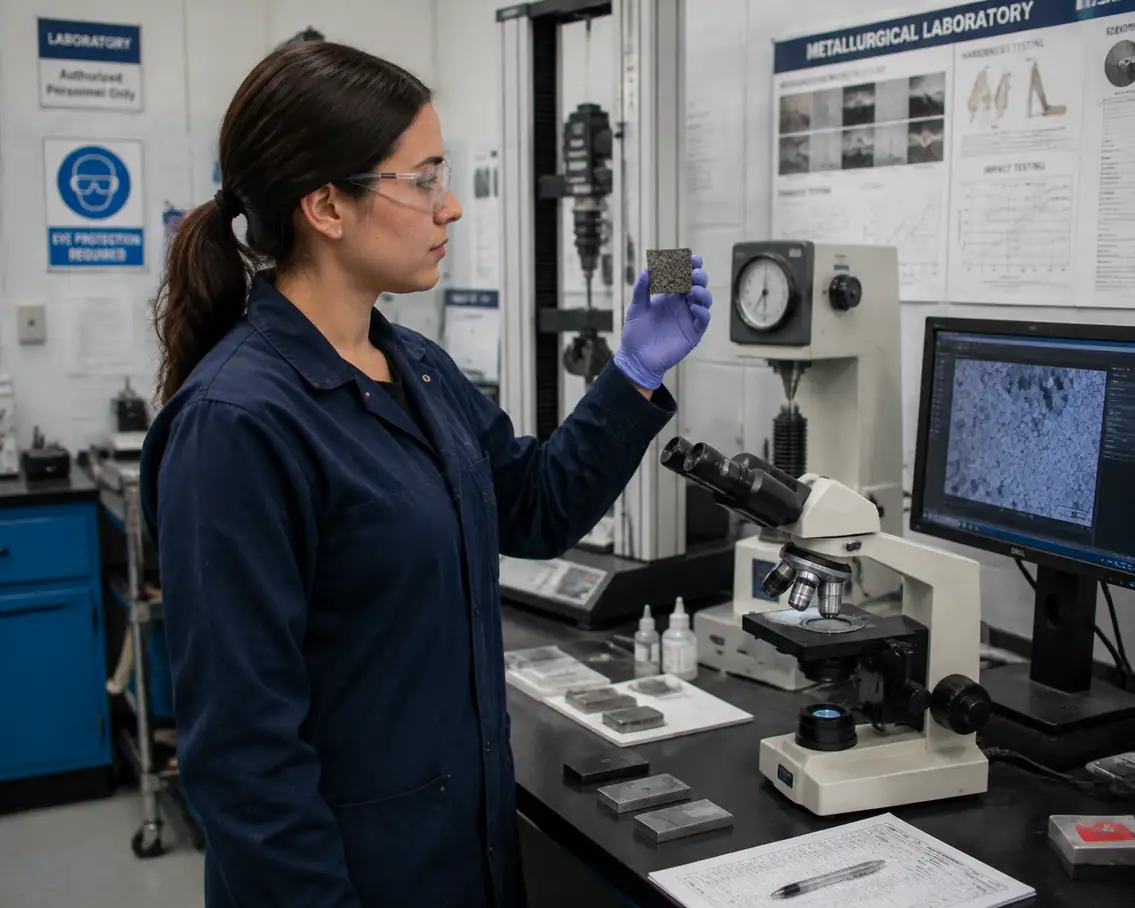
A metallurgy laboratory technician performs metallographic sample preparation and evaluation, mechanical property testing, and microscopy, etching and specification interpretation to keep shipboard systems, components, materials, and formal acceptance testing safe, reliable, compliant, and ready for operation. Many people start with a two-year associate degree or a technical certificate rather than a four-year degree.
Below: what it pays, what you'd do, the skills you need, and how to become one.
The role profile
Everything you need to know about this role, the same details employers use to post openings and colleges use to build training.
How much does it pay?
Explore the core responsibilities of this role, from daily operations and equipment handling to safety, quality, and performance requirements.
Prepare metallographic samples
Section, mount, polish, and evaluate metallographic samples.
Test mechanical properties
Run tensile, hardness, and impact testing to verify material properties.
Examine and interpret
Use microscopy and etching and read the specification to judge the result.
Plan and execute procedures
Work from written test plans and procedures, step by step, with records.
What skills do you need?
Three core skills sit at the heart of this role. You can learn all of them through short, hands-on training.
Metallography
Preparing and evaluating metallographic samples in the lab.
Mechanical Property Testing
Running tensile, hardness, and impact tests on materials.
Microscopy & Specs
Reading microstructure against the governing specification.
Related roles.
%2520Technician.webp)


Ready to start your
technician journey?
Get matched with training, apprenticeships, and employers tailored to this role.