.svg)
Electric Engineering Technician
Also posted as Electric Engineering Tech; Utility Engineering Technician; Electrical Utility Engineering Technician; Customer Engineering Technician; Electric Design Technician
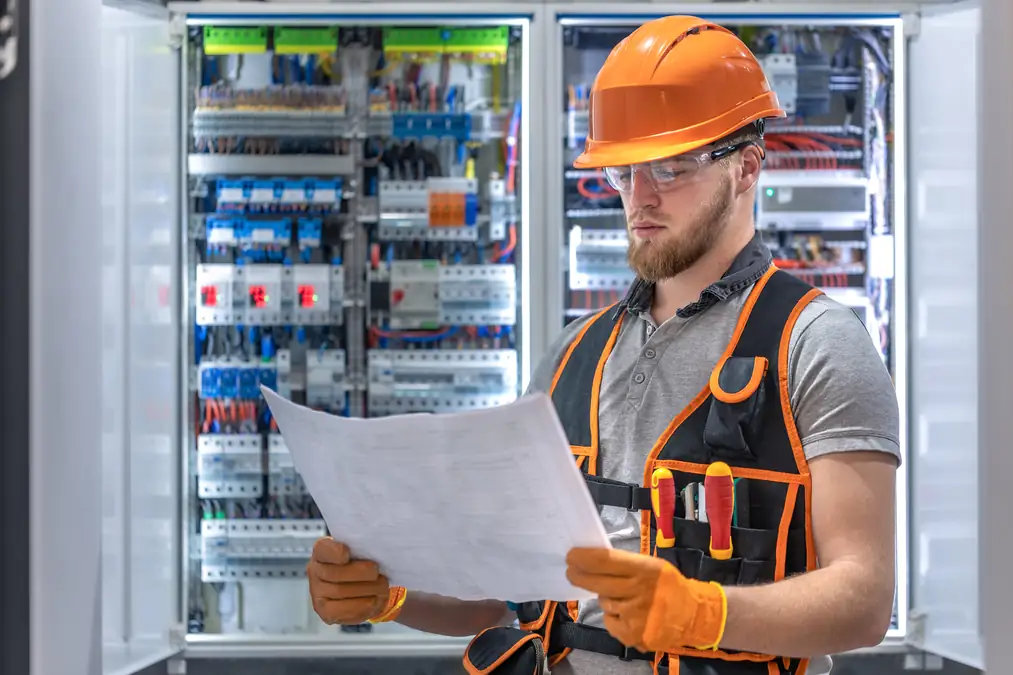
An electric engineering technician performs technical design, field investigation, staking, drafting, work-order development, cost estimating, permitting, and customer engineering support for electric distribution and transmission projects. Many people start with a two-year associate degree or a technical certificate rather than a four-year degree.
Below: what it pays, what you'd do, the skills you need, and how to become one.
The role profile
Everything you need to know about this role, the same details employers use to post openings and colleges use to build training.
How much does it pay?
Explore the core responsibilities of this role, from daily operations and equipment handling to safety, quality, and performance requirements.
Design distribution work
Design overhead and underground services, line extensions, lighting, and distribution improvements to standard.
Prepare work packages
Produce construction drawings, material lists, estimates, work orders, permits, and easement documents.
Perform field investigation
Take field measurements, stake jobs, inspect sites, run load calculations, and review customer needs.
Work in utility software
Use GIS, CAD, work-management, asset, and utility design systems.
What skills do you need?
Three core skills sit at the heart of this role. You can learn all of them through short, hands-on training.
Distribution Design Support
Designing electric distribution work within utility standards.
Estimating & Work Orders
Building work orders, material estimates, and cost calculations.
GIS & CAD Tools
Working in GIS, CAD, and utility design software.
Related roles.



Ready to start your
technician journey?
Get matched with training, apprenticeships, and employers tailored to this role.