.svg)
.svg)
You're standing at a crossroads. Three different technician careers are competing for your attention: mechatronics, industrial maintenance, and robotics. Each offers strong pay, job security, and hands-on work. But they're not the same path, and the one you choose shapes your daily work, your skill development, and your salary trajectory.
This guide breaks down the real differences between these three roles. You'll see what the daily work looks like, what skills each demands, what kind of salary you can expect in 2026, and where the job market is heading. By the end, you'll have the clarity you need to choose the path that fits your strengths and interests.
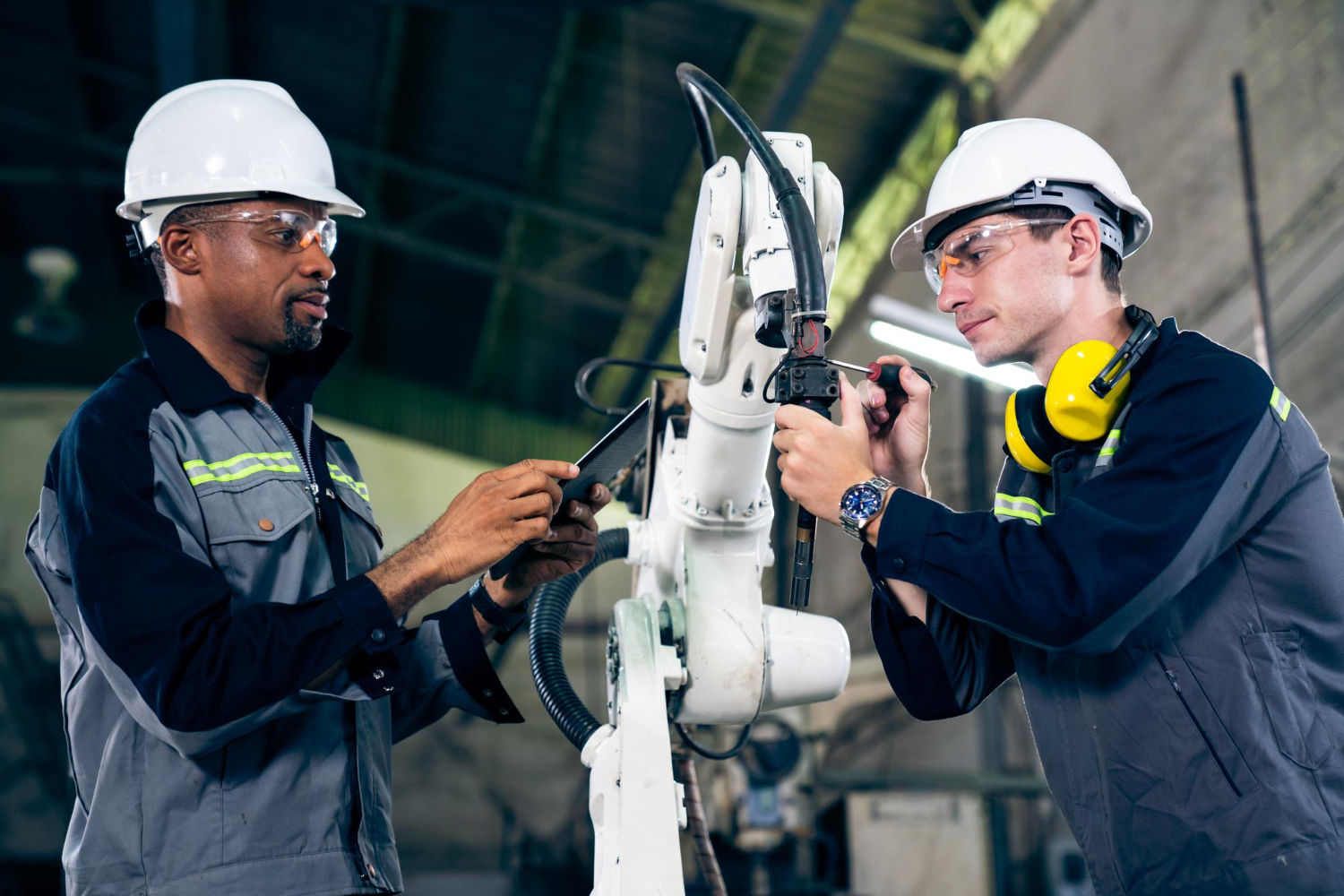
A mechatronics technician maintains and repairs systems that blend mechanical, electrical, and computer components. You work on CNC machines, robotic arms, conveyor systems, and assembly line equipment where all three domains interact. Your days involve troubleshooting complex systems, performing scheduled maintenance, and sometimes reprogramming control systems or adjusting sensor calibrations. You're the problem-solver at the intersection where mechanical parts meet electronic controls.
Mechatronics technicians work across advanced manufacturing plants, automotive assembly facilities, pharmaceutical production, and electronics manufacturing. You might keep robots running smoothly in an automotive plant or troubleshoot a conveyor malfunction in a beverage bottling line. When a CNC machine fails and production grinds to a halt, your ability to diagnose and fix the problem determines whether the plant restarts in minutes or hours.
In 2026, employment in advanced manufacturing automation is expanding as companies invest in robotics, smart factory technologies, and integrated systems. Jobs in this field are projected to grow faster than the average for all occupations through the next decade. The combination of mechanical and programming skills makes you harder to replace than someone with just one specialty.
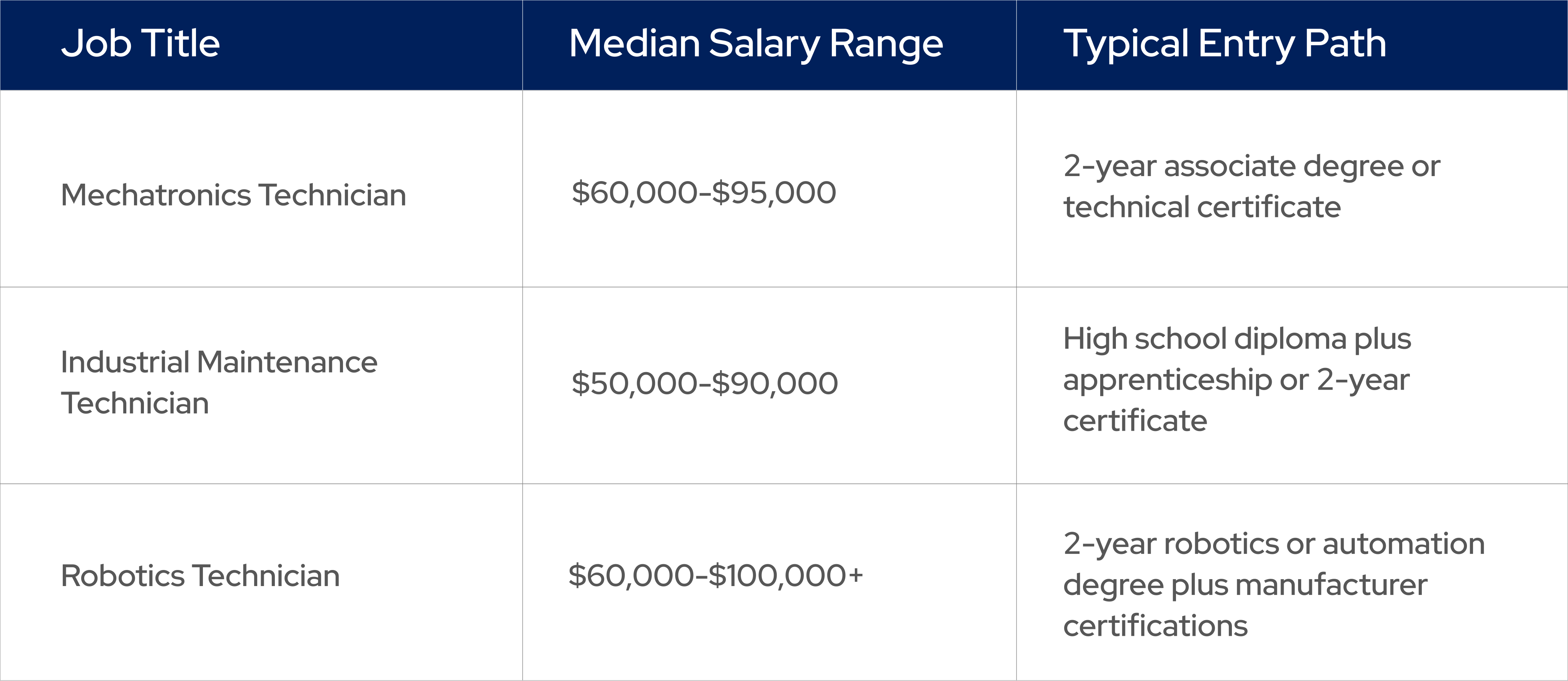
The median annual wage for mechatronics technicians typically ranges in the mid-$60,000s in most US metros, rising into the $80,000 to $95,000 range with five to ten years of experience and in high-cost states like California and Texas. Most positions follow standard manufacturing shifts, though some specialized roles include on-call availability or overtime.
Entry into this career typically requires a two-year associate degree in mechatronics or a related technical field, or a technical certificate program covering mechanical systems, electrical circuits, and programmable logic controllers. Certifications may include NCCER credentials or manufacturer-specific certifications from companies like FANUC, ABB, or Siemens. On-the-job training typically spans two to three years before you're fully independent in complex troubleshooting and system diagnostics.
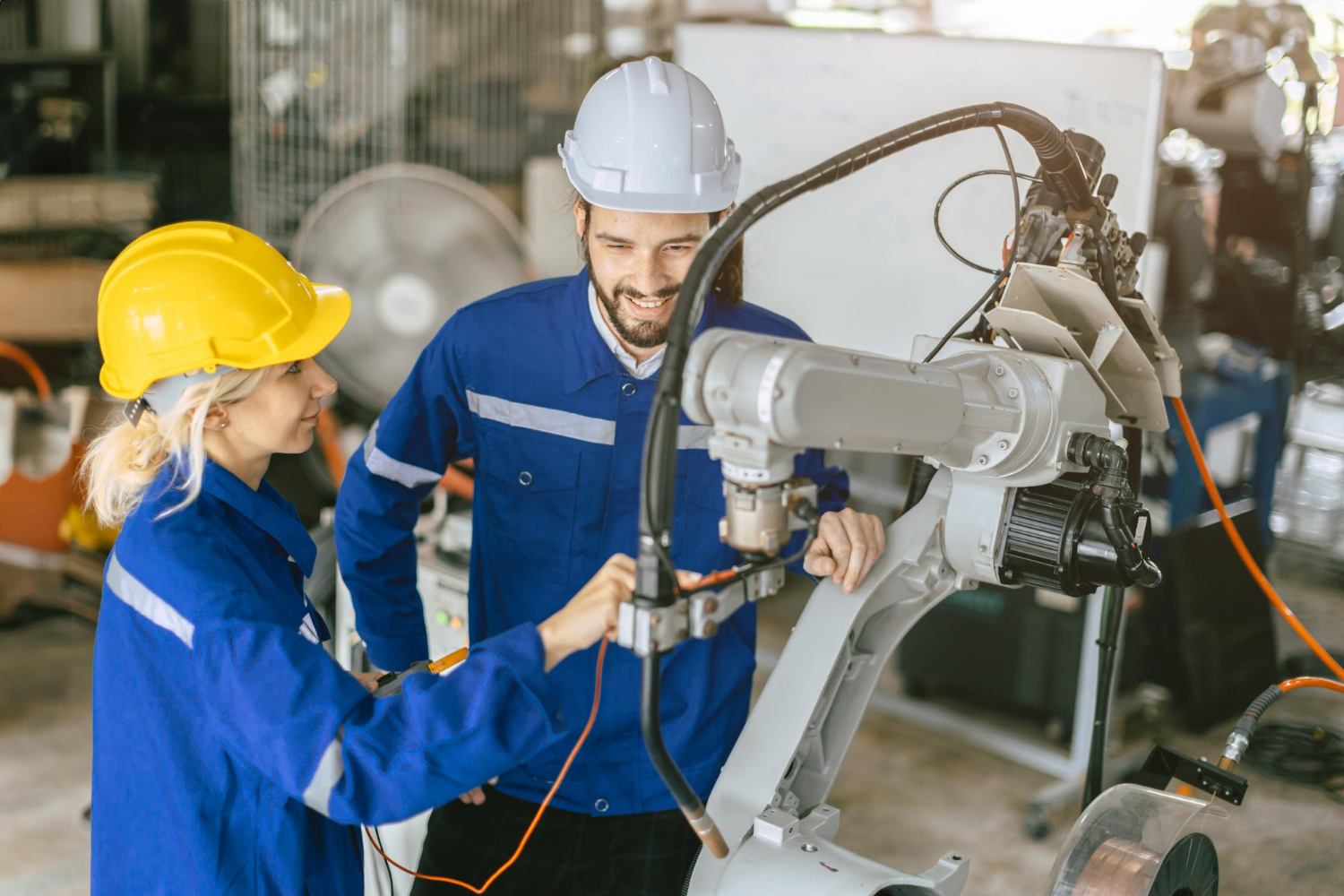
An industrial maintenance technician (sometimes called a plant maintenance technician or equipment maintenance specialist) installs, repairs, and maintains the machinery that keeps factories and plants operational. Your work spans a broader range than mechatronics: you might repair hydraulic systems one day, rebuild electric motors the next, and diagnose control circuits the day after. You're a generalist who adapts to whatever equipment breaks down, and that versatility is your strength.
Industrial maintenance technicians work in every major industry: food processing, chemical plants, steel mills, automotive manufacturing, plastics production, paper mills, and pharmaceuticals. You're the person called when equipment fails and production grinds to a halt. Your problem-solving skills and speed determine how quickly the line restarts and how much downtime the company absorbs.
In 2026, employment in industrial machinery maintenance and repair remains steady and strong. The Bureau of Labor Statistics projects ongoing demand driven by aging equipment in existing facilities, regulatory compliance requirements, and the workforce gap as experienced technicians retire. Growth is expected to continue through the next decade.
The median annual wage for industrial maintenance technicians sits in the mid-$50,000s in many US metros, rising into the $70,000 to $90,000 range with experience, specialization, and in top-paying regions. Most positions involve shift work, including evenings, nights, and sometimes weekends or on-call standby duty. Full-time employment is standard.
Entry into this career can begin with just a high school diploma plus on-the-job apprenticeship, or by completing a two-year community college certificate or apprenticeship program. Core training covers mechanical systems, electrical troubleshooting, hydraulics, pneumatics, and equipment-specific repair procedures. Relevant certifications include OSHA 10 for general industry safety, or NCCER credentials in specific trades. Expect three to five years of on-the-job training before you're fully experienced and independent in diagnosis and repair.

A robotics technician maintains, repairs, programs, and integrates robotic systems in manufacturing and automation environments. You work with industrial robot arms, automated guided vehicles, collaborative robots, vision systems, and integrated production cells. Your responsibilities span installing new robotic systems, troubleshooting motion control software, maintaining mechanical and electrical components, and ensuring robots operate safely alongside human workers.
Robotics technicians are essential in automotive assembly plants, electronics manufacturing, food and beverage processing, pharmaceutical facilities, and logistics operations. You might be deploying a new robotic welding cell in a facility, or responding urgently to a line stoppage caused by a robot calibration error. Your expertise directly impacts factory safety and production output.
In 2026, robotics technician positions are expanding faster than the average for all occupations. As manufacturers increasingly adopt robotic systems to boost productivity and manage labor costs, the shortage of skilled robotics technicians is becoming acute. Companies are competing for experienced technicians, and salaries are climbing to attract talent.
The median annual wage for robotics technicians typically ranges from the mid-$60,000s to the high $80,000s in most US metros, and can exceed $100,000 in premium roles, major industrial hubs, or high-cost areas. Some employers offer overtime, and the work often involves standard manufacturing shifts with possible weekend or on-call coverage.
Entry into this career typically requires a two-year associate degree in robotics, mechatronics, or automation technology, or a specialized robotics certificate from a technical institution or community college. Core coursework covers robot programming (often vendor-specific languages), mechanical systems, electrical controls, and industrial safety. Certifications are usually manufacturer-specific and highly valued: FANUC, ABB, Kuka, and Universal Robots offer training and certification programs recognized across the industry. On-the-job training typically spans two to four years, and your earliest certifications often drive your salary progression.
You've read the job descriptions, salary ranges, and education paths. Now comes the real question: which path aligns with your interests and strengths?
Choose mechatronics if you love integrated systems and enjoy programming and troubleshooting control logic. Mechatronics roles reward deep technical knowledge in a specific domain and often offer higher salaries for specialized expertise. You'll be the go-to person for complex systems that combine mechanical and electronic components.
Choose industrial maintenance if you're a versatile problem-solver who wants breadth over depth. You'll work on many different types of equipment, keep learning throughout your career, and develop a wide skill set. This path is also the most accessible if you're starting with just a high school diploma. The work is never routine, and no two days are identical.
Choose robotics if you want to work on the advancing edge of manufacturing automation, enjoy hands-on programming and integration work, and are willing to pursue manufacturer certifications. The job market is hottest here in 2026, and salaries are climbing as demand outpaces supply. You'll be working with the technology that's shaping the factories of the future.
The honest answer: all three careers offer solid pay, job security, and advancement potential. Your choice should be based on the type of work that energizes you, not just the salary range. If you're passionate about hands-on technical work and problem-solving, you'll thrive in any of these roles. The real question is which daily challenge interests you most.





Picking a career in skilled trades can feel like a big decision, and it is. You're not just choosing a job title; you're choosing a daily work experience, a salary trajectory, and a career path with real advancement potential.
All three of these careers offer excellent pay, strong job security, and the satisfaction of hands-on work that makes a difference. Mechatronics offers specialization and high technical challenge. Industrial maintenance offers versatility and broad skill development. Robotics offers advanced technology and climbing salaries. Each path leads to a stable, well-compensated career with room to grow.
Technicians of America™ is part of the Skills-to-Jobs Marketplace that connects working adults with training designed by industry. Our programs, developed in collaboration with leading employers like Amazon, prepare you for the specific skills these technician roles demand. Whether you're exploring mechatronics, maintenance, or robotics, you'll find job-focused courses aligned with what employers are hiring for right now.
Sign up for a free trial and explore the training options in these technician careers. Take the first step toward a career that pays well, offers real job security, and puts your problem-solving skills to work every day.