.svg)

.svg)
You've heard the warnings about technician shortages. You've heard about wage growth in skilled trades. But if you're a woman considering the shift, you've probably heard a different story: "It's not for you." "You won't fit in." "The pay gap will follow you there too."
These concerns aren't unfounded. Women remain underrepresented in technician roles, typically comprising 5 to 15% of the workforce across most trades. But here's what that old narrative misses: the barriers are documented, solutions exist, and women technicians are building thriving careers right now. Employers are actively recruiting, supporting, and retaining female technicians in ways they weren't five years ago.
This article separates myth from fact. We look at real industry data and explore what's actually blocking women's entry. We walk through the career paths women are choosing today. On Technicians of America, you'll find role profiles and wage data showing exactly where women technicians work and what they earn. The question isn't whether this field is for you. It's which technician career fits your life.
Ask most people about women in trades, and they'll say there aren't many. They're technically right, but the story is more nuanced. Women remain a minority in technician roles, typically 5 to 15% of the workforce depending on the specialty. But that baseline is shifting faster than people realize.
The skilled trades face a historic worker shortage. The Bureau of Labor Statistics projects growth across HVAC, electrical, instrumentation, maintenance, and manufacturing technician roles through 2034. This pressure forces employers to look beyond traditional recruitment pools. Women represent a massive untapped workforce, and smart employers know it.
Here's what the data actually shows: women do succeed as technicians. They're concentrated in certain specialties. Walk a factory floor in a pharmaceutical facility or refinery, and you'll see instrumentation and control technicians (who maintain sensors, monitors, and control systems) at higher rates than you would on an HVAC job site. But across all trades, the pattern is consistent: women who enter the field build careers, earn competitive wages, and often move into supervisory and specialist roles.
Several forces align. Demand is strong across specialties. Wages are competitive at all experience levels. Career progression is clearly defined, with advancement from technician to lead technician to plant specialist roles. Technician shortages mean competition for hires is intense, so employers can't afford to skip qualified applicants based on gender.
Additional factors stand out: Entry-level technician roles start at living wages. Experienced technicians earn substantial income in many specialties, especially in manufacturing and instrumentation work. Many instrumentation technicians use CMMS (computerized maintenance management systems) and earn among the highest technician wages in their regions.
The Women in Manufacturing organization and trade associations like NCCER have published data showing female technician retention rates are comparable to male retention rates when workplaces invest in inclusive culture and mentorship. The barrier isn't capability or staying power. It's entry and early support.
To talk about opportunity without naming the obstacles wouldn't be honest. Women face documented barriers to entering and advancing in technician careers. But here's the thing: most of these barriers aren't immutable. They're systemic, which means they can be solved.
Barrier 1: Limited apprenticeship access and mentorship. Many apprenticeships rely on word-of-mouth recruitment and informal networks. If you don't know someone in the trade, entry is harder. Women often lack same-gender mentors in roles that are 85% male. The solution exists: organizations like the Smart Automation Certification Alliance (SACA) and initiatives at companies like Amazon have created formal apprenticeship pipelines with dedicated mentorship. Unmudl, a training provider, routes working adults into technician roles through structured courses, many designed by employers themselves.
Barrier 2: Workplace culture. The trades aren't monolithic, but many still carry assumptions about "guys' work." New female technicians sometimes encounter skepticism from colleagues or supervisors who doubt their competence. The solution: companies that invest in inclusive hiring also invest in workplace culture. Anti-harassment policies, diverse hiring panels, and mentorship create environments where women advance. Companies committed to diversity, equity, and inclusion in manufacturing actively recruit women and support their growth.
Barrier 3: Training programs designed for a specific learner. Many traditional apprenticeships assume a school-to-work pipeline: high school graduate, full-time apprenticeship, single household income. That model misses adults, single parents, and career changers (demographics where women are overrepresented). The solution: short-format, employer-designed training. Courses in instrumentation, HVAC, and maintenance can now be completed in weeks to months, not years. This opens the door to people who can't commit to a traditional multi-year program while supporting a family.
Barrier 4: Lack of visibility. Many women don't know these careers exist, what the day-to-day looks like, or what the pay really is. The solution: role visibility and wage transparency. Sites like Technicians of America show profiles of technician roles, regional demand, and earning ranges so you can make an informed decision.
Here's a question that comes up in every conversation about women and technician careers: "Will I earn less than men doing the same work?"
The honest answer: not typically, compared to same-role same-experience male peers. Technician pay in most trades is set by union scales, certification levels, and employer pay bands, not by gender. A female HVAC technician with an EPA 608 certification (required to handle refrigerants) and five years of experience earns the same base as a male peer at the same company. A female instrumentation technician with a CMRP (Certified Maintenance and Reliability Professional) credential isn't paid less for the credential.
That said, wage gaps do appear in aggregate data, and they're worth understanding. In some data sets, women technicians earn 8 to 12% less on average than men. This gap typically reflects not unequal pay for equal work, but rather: women are concentrated in specialties that pay slightly less, women are more likely to work part-time by choice or circumstance, and women are underrepresented in the most senior or specialized roles where pay is highest. A female technician who advances to lead technician, specialist (like automation or predictive maintenance, which focuses on equipment failure prediction and prevention), or supervisor roles earns at or above regional averages for those positions.
The path to closing this gap is straightforward: specialize, accumulate certifications, and move into higher-paid roles. A technician pursuing a CMRP credential, or specializing in instrumentation (higher-paid than HVAC in most markets), or moving into predictive maintenance will see wage progression. Women are doing this now. The barrier isn't capability; it's visibility and access to upskilling opportunities.
Companies using workforce analytics to track retention and promotion are finding that women technicians who have mentors and access to training for advancement stay longer and move up faster. This is good business, and it's also closing the gap.
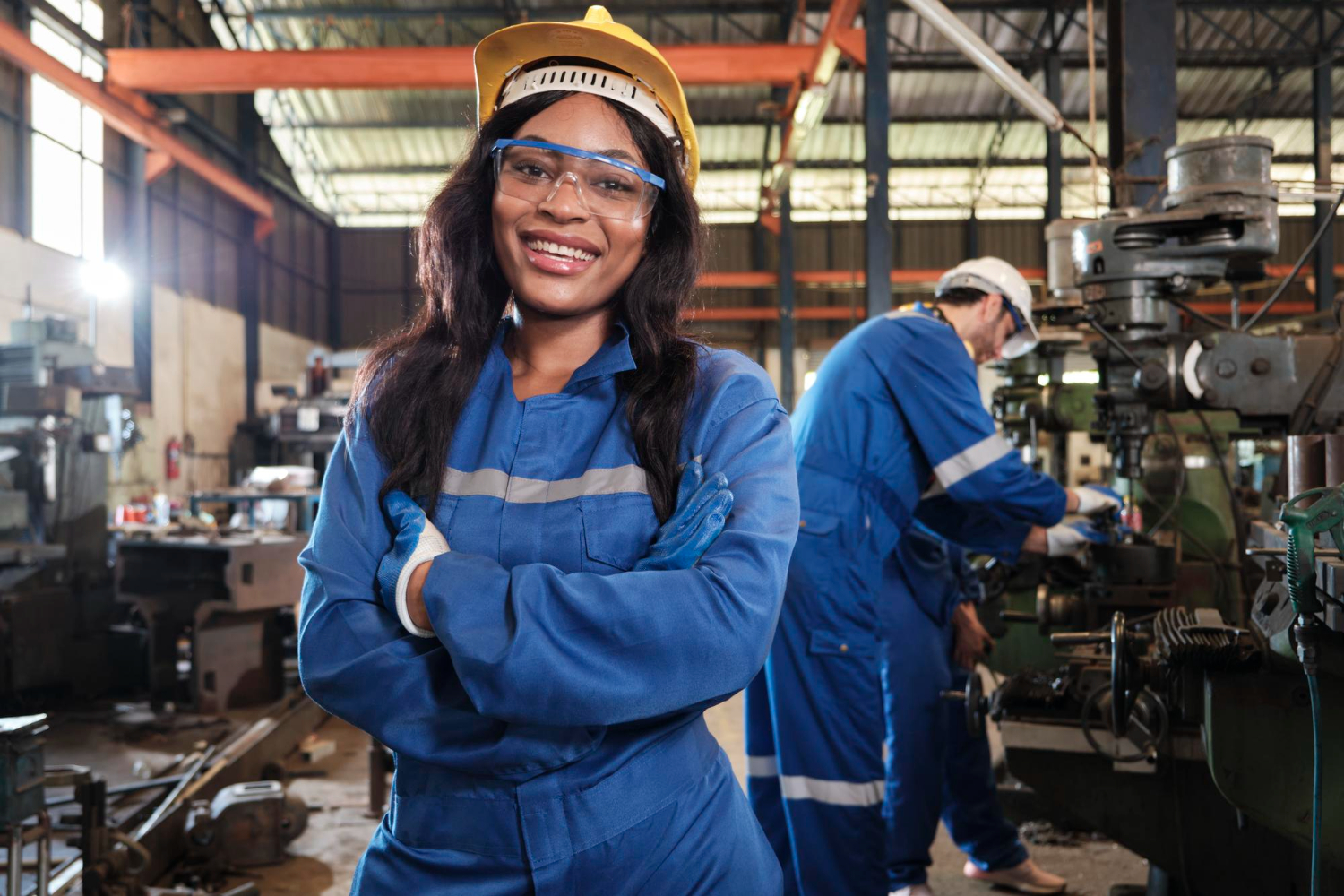
The stereotype of "technician work" is usually someone under a car or inside a furnace. Reality is more diverse. Here are four technician roles where women are building careers right now.
HVAC Technician. HVAC technicians install, maintain, and repair heating and cooling systems in homes and commercial buildings. The work is hands-on but doesn't require brute strength; diagnosis, problem-solving, and attention to detail matter more. Entry requires an EPA 608 certification (an 8 to 12 hour course plus exam), and many HVAC technicians complete apprenticeships through community colleges. Pay ranges from $35k to $65k+ for experienced technicians. Demand is strong and will remain so through 2034.
Instrumentation and Control Technician. These technicians work in manufacturing plants, pharmaceutical facilities, refineries, and utilities, installing and maintaining the sensors, monitors, and control systems that keep operations running. It's precise work. Women represent a higher percentage of this workforce than HVAC. Entry requires technical training: high school plus a technical program, or an accelerated course covering PLCs (programmable logic controllers), sensors, and control systems. Pay ranges from $40k to $75k+. Unmudl offers employer-designed courses in instrumentation and control systems that can be completed in weeks to months. This is one of the fastest-growing specialties.
Electrical Technician. Electrical technicians install and maintain electrical systems in buildings, industrial sites, and utilities. The role involves diagnosis, code compliance, and safety precision. Entry typically requires an apprenticeship (four years) or a technical program plus certifications like NATE (National Association for Technical Excellence). Pay ranges from $40k to $70k+. Unions in electrical trades have, in many regions, made explicit commitments to recruiting women, which is opening doors.
Manufacturing Technician / Maintenance Technician. These technicians maintain and repair production equipment in factories, electronics assembly, automotive, and advanced manufacturing. The role blends mechanical troubleshooting, electrical diagnostics, and software or PLC work. Entry requires a technical program or military training (many exit military skilled trades into manufacturing technician roles). Pay ranges from $40k to $80k+ with growth as you specialize in maintenance reliability or automation. Amazon's Career Choice program supports employees and includes maintenance technician training through Unmudl.
Where should you look? Here are patterns that signal a female-friendly technician employer.
Explicit recruitment of women. Companies with diversity, equity, and inclusion commitments often post jobs highlighting women in technician roles and may run targeted recruitment. Utilities like Duke Energy and American Electric Power have created women's networks and mentorship. Manufacturing companies partnering with trade organizations actively recruit women into maintenance and production technician roles.
Formal apprenticeships and training pipelines. Ad-hoc apprenticeships (learn on the job, no structured curriculum) put newcomers at a disadvantage; women especially benefit from clear learning paths. Look for employers offering structured training, mentorship pairing, and defined progression. Unions in electrical, plumbing, and HVAC trades have apprenticeship programs; many have updated recruitment and retention practices to welcome women.
Amazon Career Choice (available through Unmudl). Amazon's Career Choice benefit covers up to 95% of tuition for courses, including HVAC, electrical, and advanced manufacturing technician training. The program is open to all employees regardless of role. It's a concrete example of an employer removing the financial barrier to retraining. Courses are delivered by Unmudl, and the timeline is weeks to months for many specialties.
Manufacturing companies with technician programs. Electronics manufacturers, semiconductor assembly, and advanced manufacturing hubs often run training programs for production and maintenance technicians. Companies have partnered with training providers to create structured pathways. These programs are increasingly designed to be inclusive and attract diverse cohorts.
Trade associations and networks. Organizations like the National Association of Women in Construction, Women in Manufacturing, and industry-specific groups (SACA for automation, NATE for HVAC) offer mentorship, conferences, and job boards. Many have chapters by region. Joining a network early, even before you enter the field, gives you visibility into opportunities and connections to mentors.
Mentorship is the secret ingredient. Women who enter technician careers with a mentor complete apprenticeships faster, advance more quickly, and stay longer. Yet mentorship in male-dominated trades doesn't happen by accident.
Here's where to look. First, seek out women in your chosen specialty. If you're interested in HVAC, find female HVAC technicians in your area. Ask to shadow or grab coffee. Most technicians remember what it was like to be new and will help. Trade associations often have directories or networking events.
Online communities and networks are growing. Women in Manufacturing has local chapters and an online community. SACA has resources for women entering automation. Tradeswomen Inc. and other national organizations offer virtual mentorship. These aren't always formal programs, but they're places where you'll find peers and learn from people who've been where you are.
If you enroll in a formal training program or apprenticeship, ask about mentorship. Good training providers and employers build it in. Community colleges and union apprenticeship offices increasingly maintain mentor networks. They can connect you with someone in the field. Some have structured mentoring programs where mentors and mentees meet monthly.
Conferences and hands-on workshops are investments, but the ROI is real. Events like the Women Construction Owners and Executives (WCOE) conference and Women in Manufacturing symposia often have networking and mentorship. You meet people doing the work, learn about companies, and often land leads on jobs or apprenticeships.
Mentorship works in both directions. Early in your career, a mentor guides you through technical skills and workplace culture. As you advance, mentoring the next generation becomes your role. Women who become senior technicians often become fierce advocates for bringing more women into the field.





Employers aren't looking for excuses not to hire women technicians. They're looking for people. The technician shortage is real and pressing. Wages are competitive. Career progression is clear. Mentorship networks are growing. And training pathways are faster than ever.
Amazon's Career Choice program, delivered through Unmudl, is one concrete example: it removes the financial and time barriers for thousands of employees, including a growing number of women, to retrain into technician roles. More companies are following. The shift toward inclusive, supportive technician careers isn't coming. It's here now.
Your question isn't whether the field is for you. It's which technician career fits your life, and how to start.